Understanding Hair Follicles & How Electrolysis Permanently Stops Hair Growth
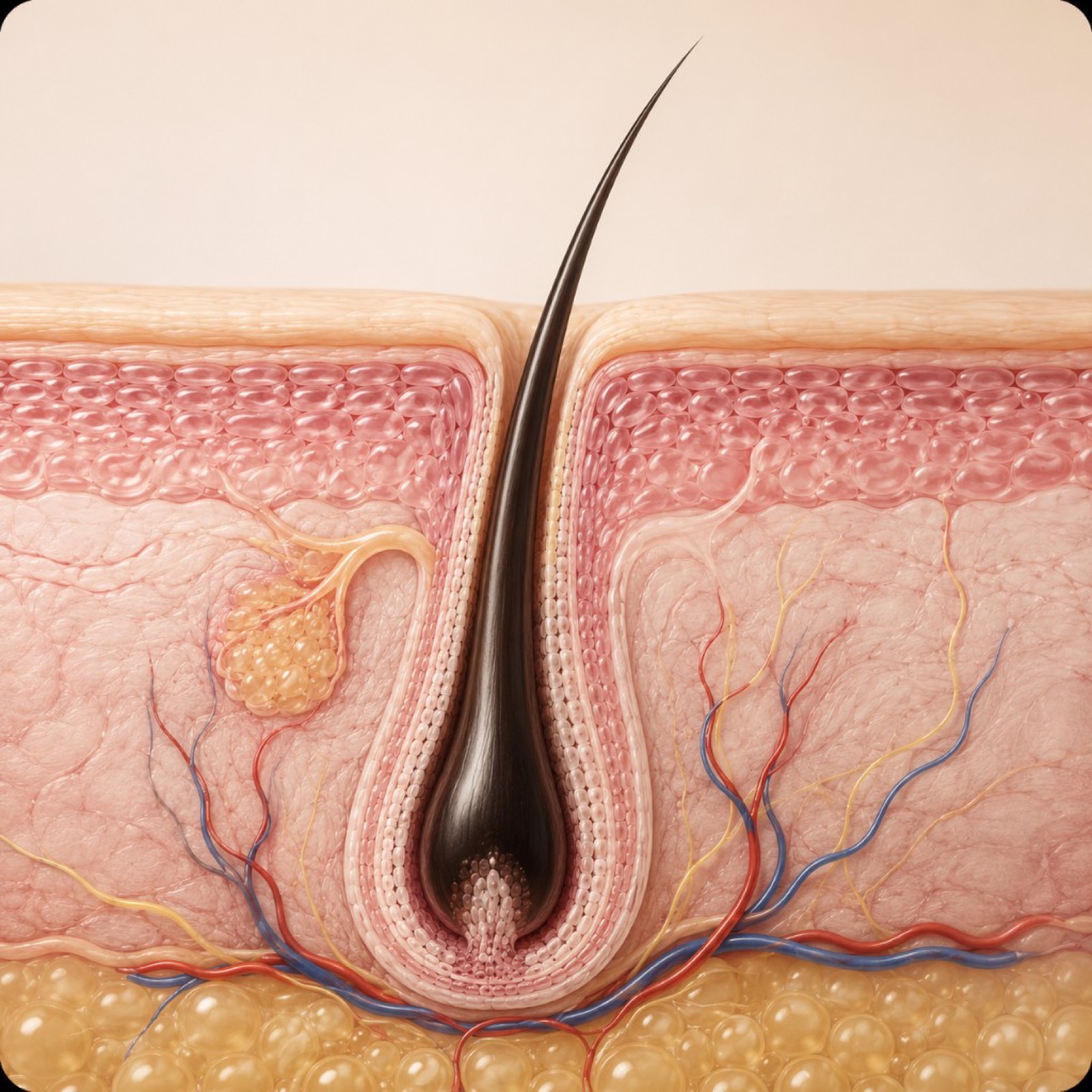
If you’ve ever wondered how electrolysis can permanently stop a hair from coming back, the answer lives inside the follicle, not on the surface where you shave or wax.
Clients in our Lehi studio ask practical questions (Will this work on my chin?). Students and curious readers ask anatomy questions (How does thermolysis destroy hair follicles? What damages the dermal papilla?). Both are fair. This post connects hair follicle structure to what we actually treat in the room.
What Is a Hair Follicle?
A hair follicle is more than a “root.” It’s a small organ under the skin that builds hair, feeds it, and coordinates growth signals.
Parts you’ll hear us reference:
- Hair shaft – the visible strand above the skin
- Hair bulb – the expanded base where living cells divide and push new hair upward
- Dermal papilla – tissue at the bottom of the bulb that supplies nutrients and growth signals; disrupting the papilla is central to lasting removal
- Bulge – a zone along the follicle wall where many stem cells live; treating growth cells here matters for long-term results
- Sebaceous gland – makes sebum (oil) along the follicle
- Arrector pili muscle – the tiny muscle that makes hair stand up (goosebumps)
- Blood supply – delivers nutrients the follicle needs to stay active
Hair bulb vs hair follicle: the follicle is the whole structure; the bulb is the deep base inside it. Electrolysis aims at the lower portion of the follicle, where growth is organized, not just the shaft you see.
What Actually Has to Change for Hair to Stop Growing?
To permanently remove a hair (FDA-recognized language for electrolysis), we need to disable the follicle’s ability to rebuild a healthy hair. In practice that means treating the lower two-thirds of the follicle: growth cells, bulge region, and support structures, including blood supply and papilla communication.
You’ll sometimes see exam-style wording like what process removes hair from the bottom of the follicle by breaking contact between the bulb and the papilla? In professional electrolysis, we don’t rip the bulb off from the outside. We destroy or disable growth cells and the papilla’s ability to regrow hair using controlled current inside the follicle. When that connection is broken effectively, the treated follicle should not produce a normal hair again.
How Does Thermolysis Destroy Hair Follicles?
Thermolysis (also called short-wave or high-frequency electrolysis) is the method many clinics use most often.
Mechanism in plain terms:
- A sterile probe slides into the follicle opening along the hair.
- Thermolysis uses a high-frequency alternating (oscillating) current that creates heat in the follicle.
- That heat coagulates (damages) the cells responsible for regrowth, including targets near the papilla and bulge when settings and timing are correct.
So when someone asks how does thermolysis destroy hair follicles? It’s heat from high-frequency current, not pigment, not waxing, and not pulling from the surface.
How Galvanic Electrolysis Works
Galvanic electrolysis uses a direct current to produce a chemical reaction inside the follicle, creating sodium hydroxide (lye) that destroys hair growth cells.
Process:
- Probe in the follicle
- Direct current applied
- Chemical action damages growth cells over a slightly longer treatment time than thermolysis alone
Galvanic is less common as a solo method today, but it’s still part of the toolkit, especially in blend work.
What Is Blend Electrolysis?
Blend electrolysis combines thermolysis + galvanic in the same follicle: heat plus chemical action. Some hairs that resist one approach respond better when both energies are used in a controlled blend.
If you’ve memorized what two methods are combined in the blend? That’s the pair.
Hair Growth Cycles and Why It Takes Time
Follicles rotate through growth (anagen), transition (catagen), and rest (telogen) phases. Electrolysis is most effective when hairs are in anagen and fully visible enough to treat.
Because only a fraction of hairs are in the right phase at once, you need a series of sessions, not one visit. Our first-appointment guide explains how we plan that in Utah Valley.
Hormones can still wake up new follicles over time (see why hair gets thicker or darker or PCOS-related growth). Clearing an existing follicle is permanent; managing new ones is part of a long-term plan.
After Treatment: Protect the Follicle Site on the Skin
Destroying the follicle is only half the story, skin healing matters. Follow solid electrolysis aftercare and prep habits so treated sites calm down cleanly between visits.
Electrolysis for Hair Follicles in Lehi
Whether you’re studying cosmetology, comparing laser vs electrolysis, or ready to book your chin, understanding the follicle helps set realistic expectations: precise work, treated one hair at a time, built on anatomy, not magic.
We’re in Lehi and treat clients from American Fork, Saratoga Springs, Draper, Orem, Provo, Pleasant Grove, and across Utah Valley. Book a free consultation to see how thermolysis or blend fits your hair and skin, or schedule electrolysis if you’re already on your plan.
More questions? Visit our electrolysis FAQs.
Ready for Your Next Step?
Book a free consultation to talk through your goals, skin type, and whether electrolysis or laser is the right fit.