Why Does Hair Grow Thicker and Darker?
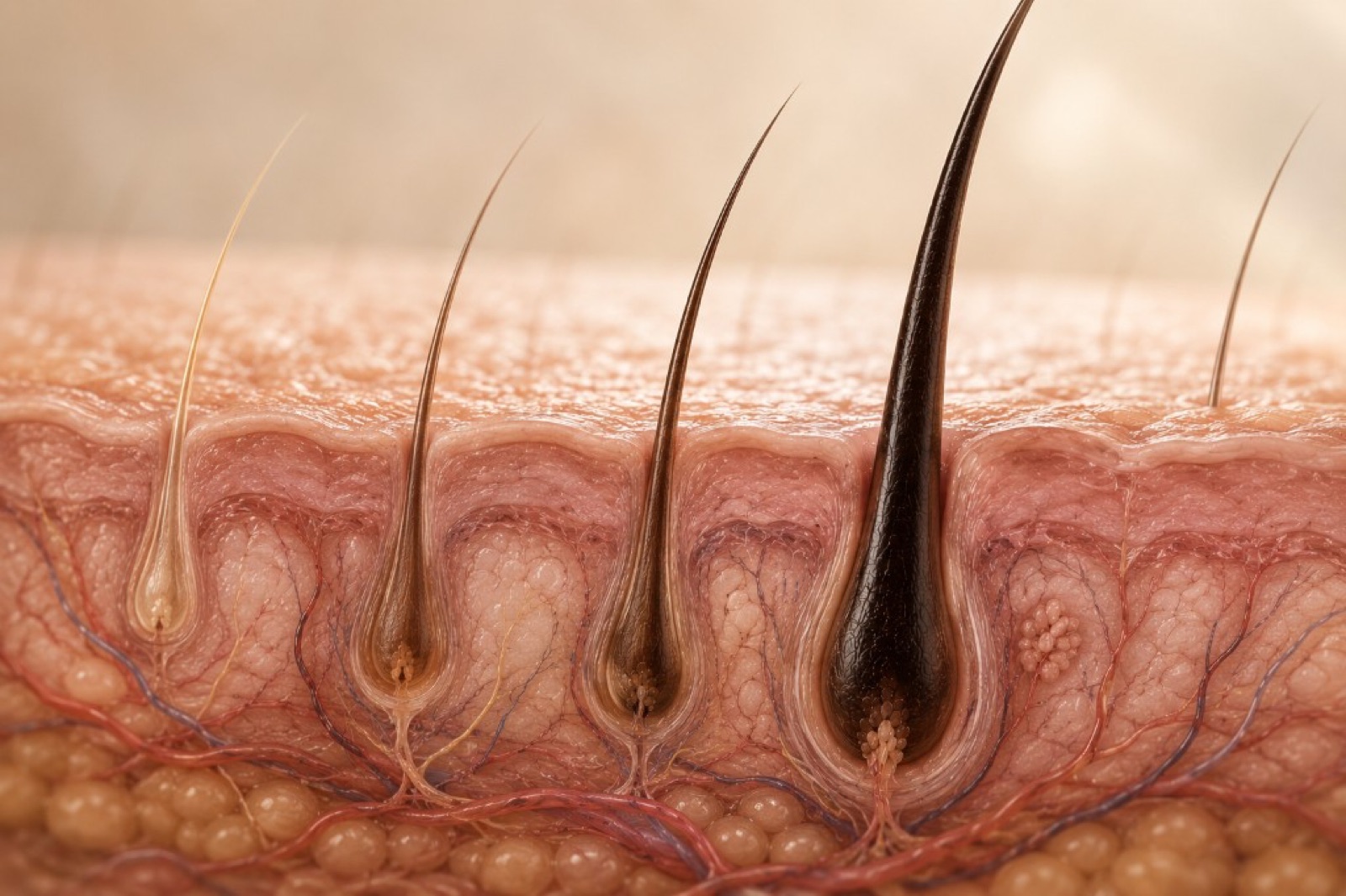
Have you noticed body or facial hair becoming thicker, darker, or coarser over time? You’re not alone. We hear it all the time in our Lehi clinic: “Why is my hair getting thicker?” or “Why are some of my hairs darker than others?” Those changes can feel sudden and frustrating, especially when you’re already tired of shaving, waxing, or plucking.
Understanding what causes thick hair (and darker pigment) is often the first step toward feeling back in control. Below we’ll walk through the most common reasons hair changes, clear up the shaving myth, and talk about when permanent hair removal might make sense for you.
Why Is My Hair Getting Thicker and Darker?
Hair thickness and color come from the follicle, the tiny structure under your skin that builds each strand. When hormones, genetics, medications, or health conditions shift how that follicle behaves, hair can look and feel different even if you’re not doing anything “wrong.”
A few patterns people notice:
- One patch or a few stray hairs feel thick, dark, or wiry while nearby hair stays fine
- Facial or body hair keeps getting darker, coarser, or thicker with age or after a life change (pregnancy, menopause, new medication)
- Hair seems thicker at the surface but not growing longer the way it used to. That can happen when coarse terminal hairs replace fine vellus hairs in an area, not because each strand is magically elongating faster
If something changed quickly or worries you, it’s always okay to loop in your doctor. We’re here to help with the hair-removal side once you understand what you’re dealing with.
Hormonal Changes
For many people, hormonal fluctuation is the biggest driver, especially androgens (like testosterone), which all bodies produce in different amounts.
Common triggers include:
- Puberty – Body hair often becomes coarser and more pigmented.
- Pregnancy – Hormone surges can wake up follicles that used to produce only fine hair.
- Menopause – Shifting hormones can bring new or heavier facial hair for some women.
- PCOS (polycystic ovary syndrome) – Higher androgen levels can lead to thick, dark hair on the chin, jaw, chest, stomach, and other areas. If that sounds like you, our post on electrolysis for PCOS goes deeper into what treatment looks like.
Tip: If you suspect a hormone imbalance, a healthcare provider can help you investigate. We can still talk through electrolysis options while you’re sorting that out.
Genetics and Where Thick Hair Comes From
Your family history strongly influences how much hair you grow, how dark it is, and how coarse it feels. If relatives tend toward dense or dark body hair, you may see the same, regardless of how carefully you groom.
Some follicles are simply more sensitive to your natural hormone levels because of inherited traits. That’s also why some hairs on the same patch of skin look thicker or darker than others: you’re often seeing a mix of follicle types, growth phases, and pigment, not one uniform “setting” for the whole area.
Medications
Certain medications can stimulate hair growth as a side effect, including:
- Steroids (such as prednisone)
- Minoxidil (often used for scalp hair loss)
- Hormone therapy (testosterone, estrogen, or related treatments)
- Some anti-seizure and immunosuppressant drugs
If hair changes started after a new prescription, mention it to your prescribing clinician.
Health Conditions
Other conditions can influence coarse or heavy hair growth, especially in women:
- Adrenal disorders (such as Cushing’s syndrome)
- Thyroid imbalances
- Insulin resistance or type 2 diabetes
These don’t always cause visible hair changes, but when they do, treatment often starts with managing the underlying condition, not only removing hair at the surface.
Hair Getting Thicker With Age?
It can. Decades of hormone exposure, slower shedding, and follicles switching from fine to coarse hair mean hair getting thicker with age is a real experience for many people, particularly on the face, chin, neck, and body. You’re not imagining it if you feel like hair “wasn’t like this” in your twenties.
Does Shaving Make Hair Grow Back Thicker and Darker?
This is one of the most common questions we get, and the answer is no.
Shaving does not change the follicle or make hair grow back permanently thicker or darker. It only cuts the strand at the skin’s surface. What changes is the feel: a blunt tip can seem stubbly or coarse until it tapers again.
The same idea applies to variations like “does hair grow back darker after shaving?” The hair may look darker at the tip right after a shave, but you haven’t altered how the follicle produces pigment or diameter.
Waxing, tweezing, and threading are different: they remove the hair from the root and can disrupt the follicle over time, but they still don’t “train” hair to grow back thicker in the way people fear shaving does.
If you’re prepping for professional removal, our guide on preparing for your electrolysis appointment explains what to do and what to avoid, before you come in.
What Can You Do About Coarse or Dark Hair?
If unwanted thick or dark hair is wearing you down, you have options beyond daily shaving.
Electrolysis is the only FDA-approved method for permanent hair removal. It treats individual follicles, which makes it especially helpful when:
- Hair is dark, coarse, or mixed in one area
- You’re dealing with PCOS-related facial hair or hormone-driven growth
- You want a solution that works across skin tones and hair colors (including lighter or gray hairs that laser often misses)
Laser hair removal can be a strong fit for larger areas and darker pigment, but many of our Utah Valley clients use electrolysis for precision areas or hair that hasn’t responded well to laser. If laser or IPL seemed to leave you with more hair, read about paradoxical hypertrichosis. A free consultation is the easiest way to see what fits your skin, goals, and budget.
Ready to Talk About Permanent Hair Removal in Lehi?
Thicker or darker hair can be frustrating, but it usually has a explainable cause, and you don’t have to manage it alone. Whether hormones, genetics, medications, or aging are in the mix, understanding the why helps you choose a plan that actually sticks.
We’re in Lehi and welcome clients from American Fork, Saratoga Springs, Draper, Orem, Provo, Pleasant Grove, and nearby communities. Book a free consultation and we’ll walk through your hair pattern, answer questions, and help you decide if electrolysis is the right next step, or point you toward other resources if you need them first.
Have more “how does this work?” questions? Browse our electrolysis FAQs or read what to expect at your first appointment.
Ready for Your Next Step?
Book a free consultation to talk through your goals, skin type, and whether electrolysis or laser is the right fit.